

What is the Mass?
The Mass is the celebration of the Eucharistic sacrifice, the Church’s sacrificial memorial of Jesus Christ’s Passion, Death, and Resurrection, in which Christ becomes truly present and gives himself to the faithful in Holy Communion. The name “Mass” is from the Latin word Missa, which means “dismissal,” which takes place at the end of liturgical worship. In the Christian West, “Mass” became the shorthand name for the Divine Liturgy.
The Mass is therefore both:
- A sacrifice: Christ’s one sacrifice on the Cross is made present sacramentally; it is not repeated, but perpetuated in the liturgical celebration.
- A sacred banquet: the faithful receive Christ himself—his Body and Blood—in the Eucharist.
- An act of worship and thanksgiving: the word Eucharist means “thanksgiving,” and the assembled Church offers praise and thanksgiving to God through Christ.
The Mass has two inseparably connected principal parts: the Liturgy of the Word and the Liturgy of the Eucharist, with opening and concluding rites.
In the simplest terms: the Mass is the Church gathered around Christ, hearing his Word, participating in his saving sacrifice, and receiving him in the Eucharist.
In the Words of the Catechism of the Catholic Church…
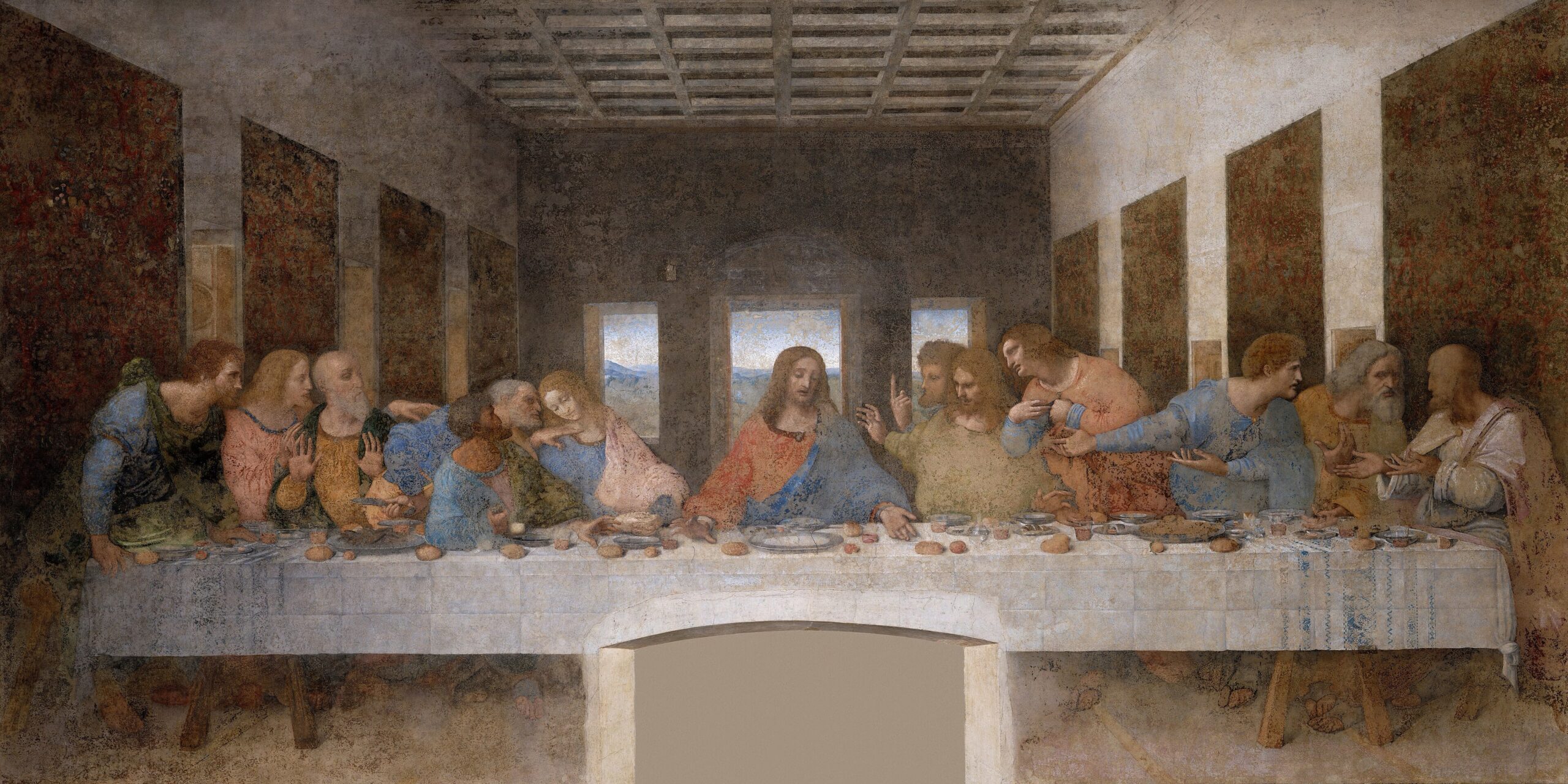
Paragraphs 1323-1327 of the Catechism provide a beautiful description of the heart of the Mass, the Eucharist: “At the Last Supper, on the night he was betrayed, our Savior instituted the Eucharistic sacrifice of his Body and Blood. This he did in order to perpetuate the sacrifice of the cross throughout the ages until he should come again, and so to entrust to his beloved Spouse, the Church, a memorial of his death and resurrection: a sacrament of love, a sign of unity, a bond of charity, a Paschal banquet in which Christ is consumed, the mind is filled with grace, and a pledge of future glory is given to us.
The Eucharist is “the source and summit of the Christian life.” The other sacraments, and indeed all ecclesiastical ministries and works of the apostolate, are bound up with the Eucharist and are oriented toward it. For in the blessed Eucharist is contained the whole spiritual good of the Church, namely Christ himself, our Pasch.
The Eucharist is the efficacious sign and sublime cause of that communion in the divine life and that unity of the People of God by which the Church is kept in being. It is the culmination both of God’s action sanctifying the world in Christ and of the worship men offer to Christ and through him to the Father in the Holy Spirit.
Finally, by the Eucharistic celebration we already unite ourselves with the heavenly liturgy and anticipate eternal life, when God will be all in all. In brief, the Eucharist is the sum and summary of our faith: “Our way of thinking is attuned to the Eucharist, and the Eucharist in turn confirms our way of thinking.”
This summation provides for us a good starting point to understand not only what the Mass is, but why the Liturgical action of the priest and the lay-faithful looks as it does.
All of this may awaken further questions. In addition to consulting our FAQs and resources, below, you may like to explore Catholicism more deeply by joining the OCIA (Order of Christian Initiation of Adults). The OCIA is a formational program designed to help you dive deeper into exploring any questions related to Catholicism, including the Mass.
I want to Explore Catholicism More deeply!Is there a way I can get an overview of the Mass?
Yes! There are many resources available for becoming acquainted with the shape of the liturgy, the Mass. The following video is a well-produced resource from Fr. Mike Schmitz. Of course, if you have further questions, you can reach out to us at the parish and schedule a conversation and we can offer further resources.
I want to learn more about the MassIs the Mass Biblical?
Yes! The Mass, or Divine Liturgy, is intensely biblical in a number of ways. First, the liturgy of the Church preserves the functions of the Jewish Synagogue (the teaching of the Word of God written) and the Temple (the Sacrifice of the people of God for Atonement of sin and maintaining relationship with God), now centered on Christ.
Christ, the Living Word of God (John 1, 5:39-47; Colossians 1:15ff.; Hebrews 4:12; Revelation 22:13) has become flesh and dwells among us. The Church, his “Body,” as St. Paul says, is in mystical union with Christ. Thus he invites us to “discern the Lord’s Body” in three inseparable ways: the Resurrected Christ himself, the Body of believers, and the Body of Christ, the Eucharist (1 Corinthians 10-12).
Jesus himself, veiled from their eyes, opened the minds of the disciples on the Road to Emmaus to understand how the Old Testament Scriptures are fulfilled in him, but he wasn’t recognized as Jesus until “the breaking of the Bread” (Luke 24). From time immemorial the Church has seen that this episode encapsulates both liturgical actions: the Word of God taught in scripture, and the Word of God present sacramentally in the Eucharist.
The same is true for Christ’s Body on the cross in John 19: when his side was pierced, “blood and water flowed out.” Once again, from time immemorial, the Church has understood this to signify the two fundamental “Sacraments of Initiation” into Christ: Baptism and the Eucharist.
What is more, you’ll hear more of the Bible read and enacted in the Catholic Mass than anywhere else in worship. The Word of God is proclaimed and preached, as well as woven throughout the entire Liturgy. Lean in and you will begin to notice…
I want to learn more!What do Catholics think about the Bible? And do they read it?
Yes, Catholics reverence the Bible as the divinely-inspired Word of God written. We are encouraged to read and study the scriptures in personal and group Bible study, as well as prayerfully in the Church’s age-old practice of lectio divina (or, “Divine Reading”). Yet, we are also to be careful so as not to interpret the Scriptures from a place of novelty or individualism that does not account for the Church’s authoritative teaching/interpretation of the Scriptures throughout the ages.
St. Peter warns in 1 Peter 3, “14 Therefore, beloved, while you are waiting for these things, strive to be found by him at peace, without spot or blemish; 15 and regard the patience of our Lord as salvation. So also our beloved brother Paul wrote to you according to the wisdom given him, 16 speaking of this as he does in all his letters. There are some things in them hard to understand, which the ignorant and unstable twist to their own destruction, as they do the other scriptures. 17 You therefore, beloved, since you are forewarned, beware that you are not carried away with the error of the lawless and lose your own stability. 18 But grow in the grace and knowledge of our Lord and Savior Jesus Christ. To him be the glory both now and to the day of eternity. Amen.”
Or, as he writes in 2 Peter 1: “20 First of all you must understand this, that no prophecy of scripture is a matter of one’s own interpretation, 21 because no prophecy ever came by human will, but men and women moved by the Holy Spirit spoke from God.” There’s much more that could be said, but you can learn more in OCIA and by clicking the resource below.
How to understand the Bible as a Catholic…
How do Catholics understand worship?
Catholics understand worship as the adoration and honor given to God, acknowledging His supreme holiness and our dependence on Him. It is a profound act of love, gratitude, and submission, expressing our deepest reverence for the Creator.
At the heart of Catholic worship is the Liturgy, especially the Eucharist (the Mass). When we participate in the Mass, we are not merely observing a ritual; we are entering into the Paschal Mystery of Christ—His suffering, death, and Resurrection—which He makes present through the sacraments (CCC 1085).The Second Vatican Council emphasized the importance of “full, conscious, active, and fruitful participation” by the faithful in the liturgy. This means engaging with the prayers, readings, and actions of the Mass with understanding and devotion, allowing the grace of the sacraments to transform our lives.
Beyond the formal liturgy, Catholic worship extends into daily life. Every action, when offered to God with love, can become an act of worship.
An introduction to Catholic worship in the LiturgyWhat are Sacraments?
The Sacraments, such as Baptism, Confession, and Eucharist, are “efficacious signs of grace, instituted by Christ and entrusted to the Church, by which divine life [of Christ] is dispensed to us.” (CCC 1131). In other words, more than merely symbols, sacraments receive their power and ability from the Spirit and Word of God to transform us from “one degree of glory to the another” (2 Cor. 3:18). In them, Christ invites us to be hidden in His very Heart from which flows all the graces of divine life and love (see John 19:34; John 1:18; Colossians 3:3). It is the sacraments that flow from Christ to us, and empower us to share in his divine nature as we receive all things from his Heart of Divine Mercy (see 1 Corinthians 10:14-17; see CCC 1118-1119).
Here’s a deeper dive on the Sacraments!Can I take Holy Communion (the Eucharist) at the Mass if I'm not Catholic?
Unfortunately, no. And knowing why that is so is a really important question that should bring us to greater dialogue across Christian traditions. At Divine Mercy Parish, we want to have that conversation with you! In the meantime, please consider this statement form the U.S. Council of Catholic Bishops (USCCB):
“We welcome our fellow Christians to this celebration of the Eucharist as our brothers and sisters. We pray that our common baptism and the action of the Holy Spirit in this Eucharist will draw us closer to one another and begin to dispel the sad divisions which separate us. We pray that these will lessen and finally disappear, in keeping with Christ’s prayer for us “that they may all be one” (Jn 17:21).
Because Catholics believe that the celebration of the Eucharist is a sign of the reality of the oneness of faith, life, and worship, members of those churches with whom we are not yet fully united are ordinarily not admitted to Holy Communion. Eucharistic sharing in exceptional circumstances by other Christians requires permission according to the directives of the diocesan bishop and the provisions of canon law (canon 844 §4). Members of the Orthodox Churches, the Assyrian Church of the East, and the Polish National Catholic Church are urged to respect the discipline of their own Churches. According to Roman Catholic discipline, the Code of Canon Law does not object to the reception of Communion by Christians of these Churches (canon 844 §3).”
I'd like a little more explanation...So, how can I respond if I cannot receive Holy Communion at the Mass?
This is an important question and you do not need to remain passive or feel as though the Church has not considered your presence in this moment. Here are just some suggestions and invitations:
- Like you attend to the Word of God preached in the homily (sermon), you can attend very closely to the rich liturgical prayers at the time of the Eucharistic Rites. Notice their message and the way they connect the Old and New Testaments to Jesus and his Church.
- You can pray during this time Our Lord’s prayer in John 17 — “that they would be one even as you, Father, are in me, and I, in you” and that we would be “perfectly one” and “consecrated in the Truth.” Notice, too, that we pray for this every Sunday as well!
- You can pray the Act of Spiritual Communion if it expresses the truth of your heart, mind, and intentions (see link below). If it does not, consider praying a prayer of your own, or meditating upon the beautiful, good, and true things you are witnessing.
- Finally, we invite you to come forward and, as you approach the priest, you cross your arms over your chest so that the priest can give you a blessing before the Presence of the Blessed Sacrament. This is actually quite common to see in the Mass so you won’t have to worry about standing out.
Why and how do Catholics believe in “the Communion of the Saints”?
You may notice how Catholics pay high regard and offer honor and Mary, the Mother of God, and the saints, and even ask for their intercession. Some may wonder if this is not idolatry.
Catholics understand Mary and the saints as powerful intercessors who, united with Christ in heaven, continue to pray for us on earth. Their intercession does not diminish Christ’s unique role as the one Mediator between God and humanity, but rather participates in and flows from it.
The Saints are those holy men and women who have died and are now in heaven with God. They are part of the “Communion of Saints,” which we confess in the Creed, which includes the faithful on earth, those in Purgatory, and those in heaven. Because they are in God’s presence, their prayers for us are effective. We ask saints to intercede for us, just as we might ask a friend on earth to pray for us, trusting that their prayers to God are heard.
It is crucial to understand that neither Mary nor the saints replace Jesus Christ as the sole mediator of salvation. Instead, they intercede through Christ. Their prayers are offered to God on our behalf, in union with Christ’s own perfect prayer. We venerate Mary and the saints, honoring their holiness and their closeness to God (very much like we honor worthy people in positions of high estate or noble life and aged wisdom), but we adore God alone.
This understanding enriches our spiritual lives by connecting us with the entire family of God, both on earth and in heaven, all journeying towards Christ.
Learn more about the Communion of the SaintsDo you have print resources I can take home to learn more about Catholic worship, scripture, and tradition?
Yes! Come talk with us or one of our priests at our Welcome table in the lobby where we’d love to give you a variety of resources and point you in various directions based on your particular questions or concerns. We also have a Parish Resources wall that contains rich literature on a variety of topics pertaining to the Faith.