

Parish Beautification
St. Maria Goretti Embellishment
At St. Maria Goretti, it is a major project — namely, to embellish the church with very noble sanctuary furnishings and with sacred art of a scale appropriate to the building. The ornamentation of the altar and pulpit is still being developed. And the painted images, in particular, need to be refined. Nevertheless, the five slides showing the plan for St. Maria Goretti will give you a very good sense of just how dramatic its transformation will be.
St. Andrew Refreshment
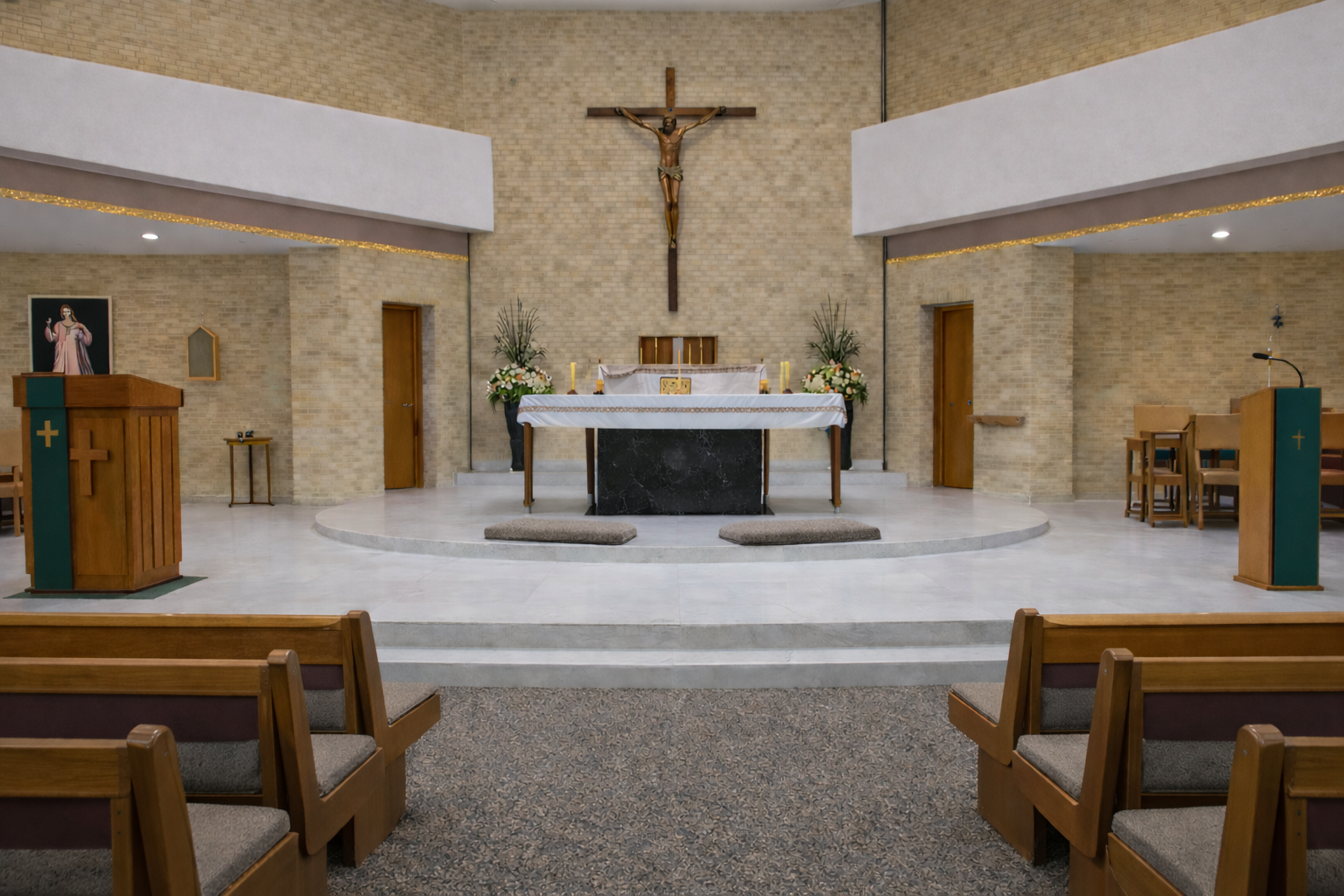
At St. Andrew, the project is much simpler. The church is already furnished and decorated in a very appropriate way. The need is principally to replace fabric elements that have seen better days, and to use colors that complement the permanent palette of the building. The largest part of the project will be new fabric and padding on pews and kneelers, and new carpeting throughout the church. We also hope to do a couple of things to enhance the quality of the sound in the church — especially the audibility of music.
Saint Maria Goretti Embellishment Project Overview
Sanctuary View
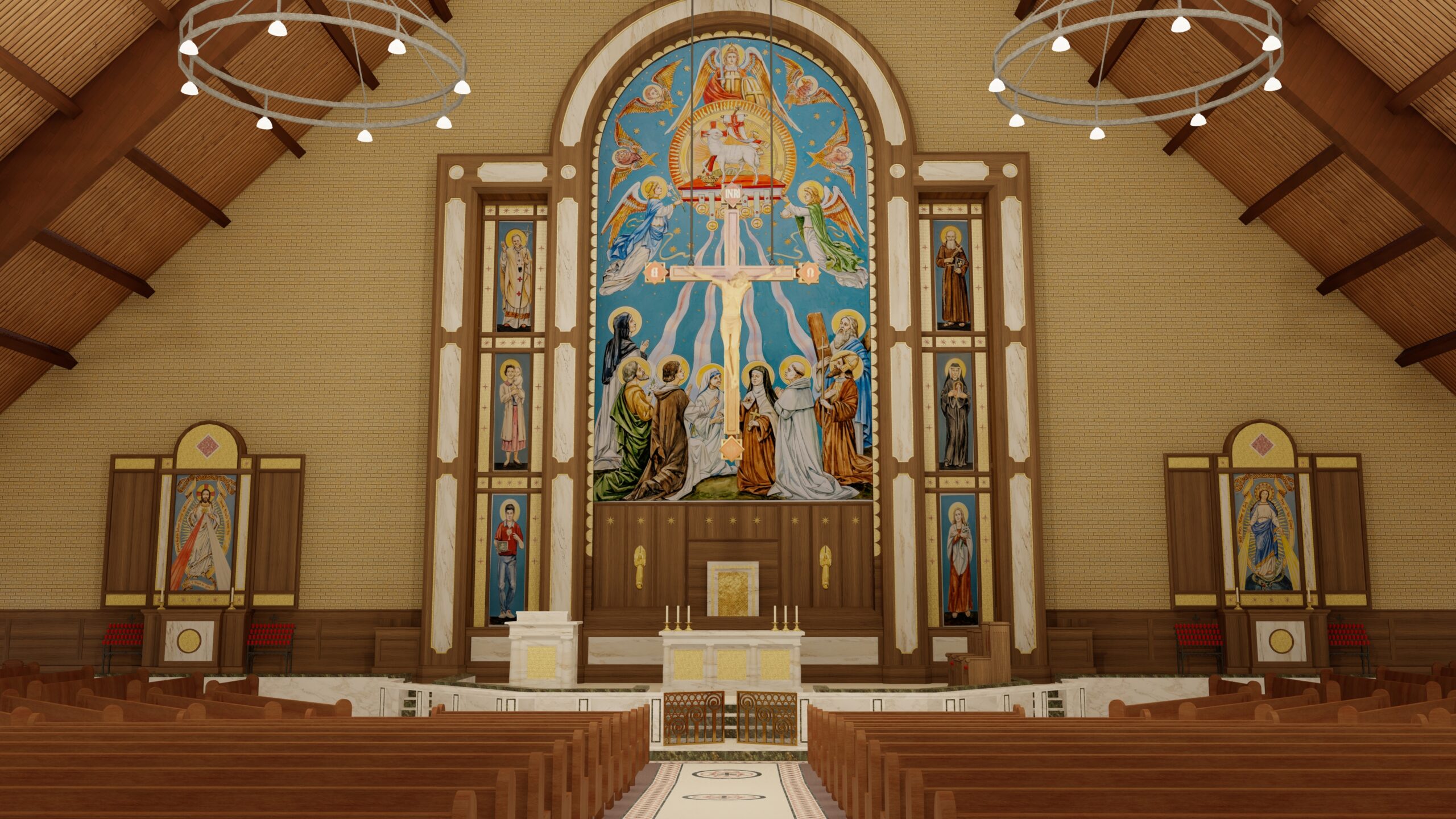
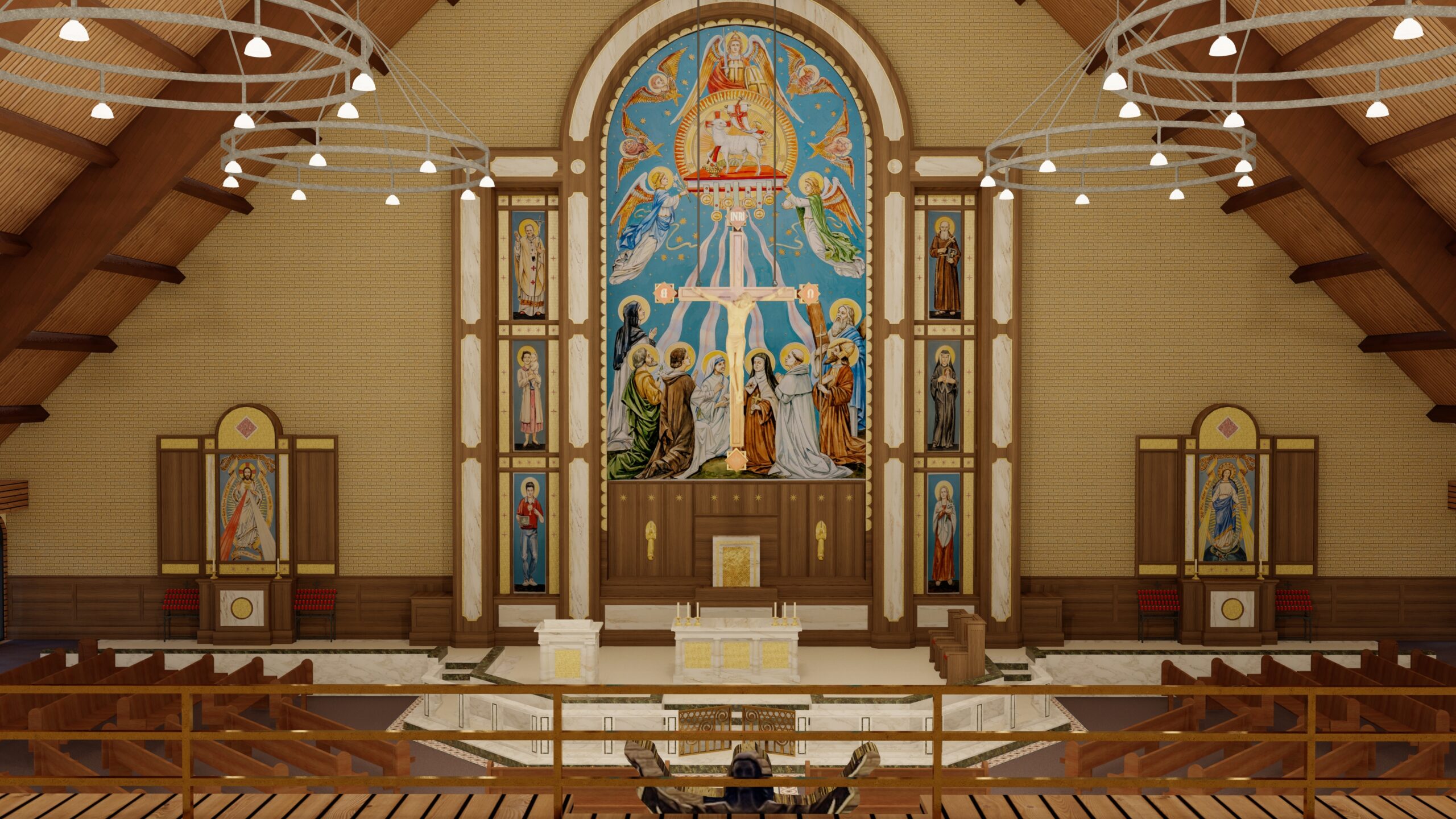
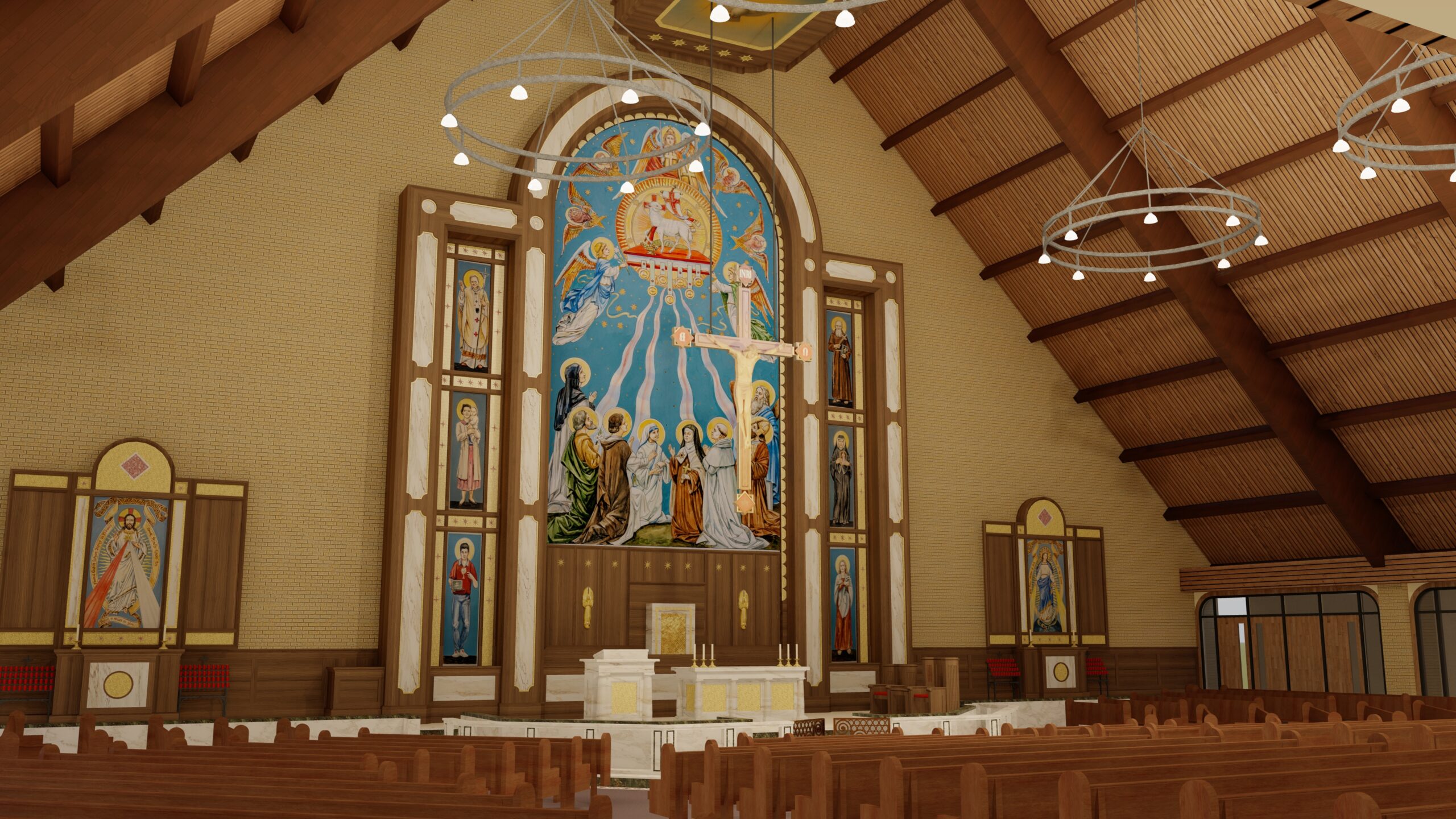
The most striking feature of the project is the use of painted images in the altarpiece and two side shrines. Painted images are used to bring more color into the church and to allow figures large enough to be appropriate to the size of the church. The altarpiece and shrines are constructed of wood, with marble inlays that relate them to the altar and pulpit.
The central image of the altarpiece features an image of the “Lamb who has been slain” standing upright in triumph. This is an image of the Risen Christ, but one that does not introduce an image of His glorified Body in competition with the corpus on the crucifix.
The Lamb is surrounded by the Archangels Michael, Gabriel, and Raphael (traditional patron of the Diocese of Madison) and symbolic representations of the four evangelists.
At the bottom of the central panel and in three frames on either side, saints who have a connection of our parish by virtue of patronage or nearness to us in time or space are depicted.
The saints, as currently planned, are:
- St. Maria Goretti – patroness of this church
- St. Faustina Kowalska – recipient of the Divine Mercy apparition
- St. Gianna Beretta Molla – 20th century laywoman; mother, physician, pro-life
- St. Joseph – patron of the Universal Church and of fathers
- St. John Paul II – extended Divine Mercy Sunday to Universal Church
- St. Carlo Acutis – 20th century layman (just canonized) – youth, technology
- St. Andrew – patron of our church in Verona
- St. William of Gellone – patron of our church in Paoli
- St. Bernard of Clairvaux – new patron of the Diocese of Madison (and its cathedral)
- Bl. Solanus Casey – a native of Wisconsin, recently beatified
- Ven. Samuel Mazzuchelli – missionary to the territory of this diocese
- St. Thérèse of Lisieux – secondary patroness of the Diocese of Madison
- St. Teresa Benedicta of the Cross (Edith Stein) – 20th century saint, university professor
- St. Teresa of Calcutta – 20th century saint with worldwide impact
The crucifix hangs lower than it currently does to relate better to both the altar and the painting behind it, and because the crucifix no longer needs to “fill” the whole height of the sanctuary. The side panels on the vertical beam of the crucifix have been removed to make the painting more visible.
The shrines on either side of the altarpiece are dedicated to the Divine Mercy (patron of the parish), and Mary as she appeared at Champion, Wisconsin in the 19th century (the only approved Marian apparition in the United States).
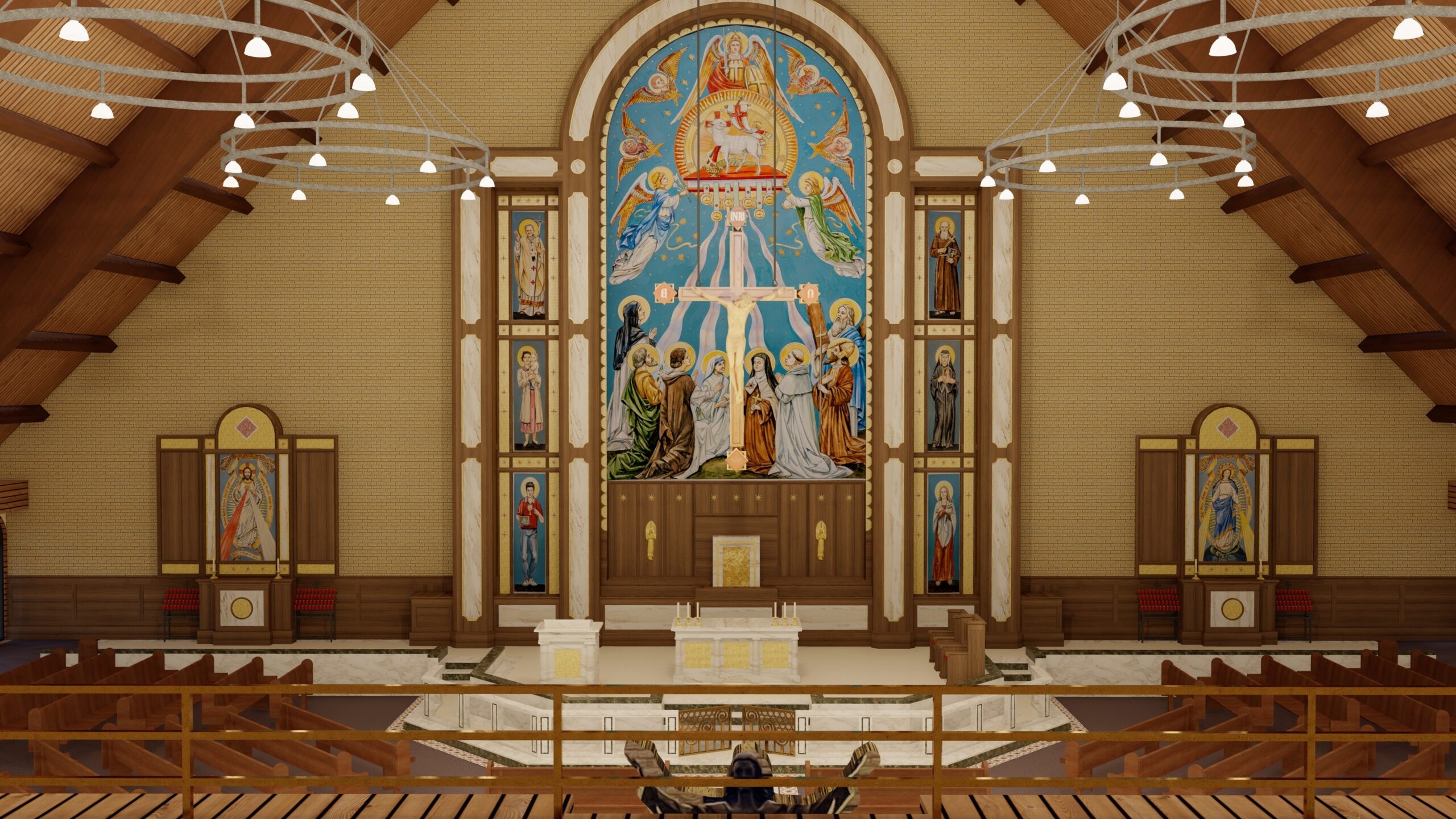
Choir Loft View
The view from the choir loft shows the furnishings of the sanctuary. The new altar and pulpit are made of marble, and feature pillars to give them greater dignity. Both will be decorated with bands of patterned mosaics (not depicted here – the gold rectangles are placeholders).
A new tabernacle is highly visible against the plain wooden paneling behind it.
(The exact profile of the tabernacle is still in development.) New chairs for the celebrant and concelebrant or deacon are constructed in wood to match the altarpiece, as are credence tables on either side of the altarpiece. Seats for servers will be on the floor of the church, in front of the first pew on either side of the sanctuary.
Also visible is a new communion rail with gates. The rail does not go all the way to the front wall,allowing servers and lectors to enter and leave the sanctuary. The highest level of the sanctuary is one step higher than currently to allow the altar and pulpit to be more visible behind the communion rail. The ramp has been removed; barrier free access to the sanctuary is available by approaching from the sacristy side. The sanctuary has a new hard floor – ceramic tile that suggests marble or polished stone.
Sanctuary Side View
A view of the sanctuary from off-center shows how the crucifix “moves” with respect to the painting behind it, allowing a variety of views and offering a certain dynamism to the perspective of the congregation.
In this view, the new “tester” is visible – the decorative element above the crucifix from which the crucifix is hanging. The tester takes the decoration of the sanctuary to the full height of the church. An image of the Holy Spirit (in the form of a dove) adorns the tester – very appropriate since the Holy Spirit is invoked in the consecration of the Eucharist on the altar directly below.
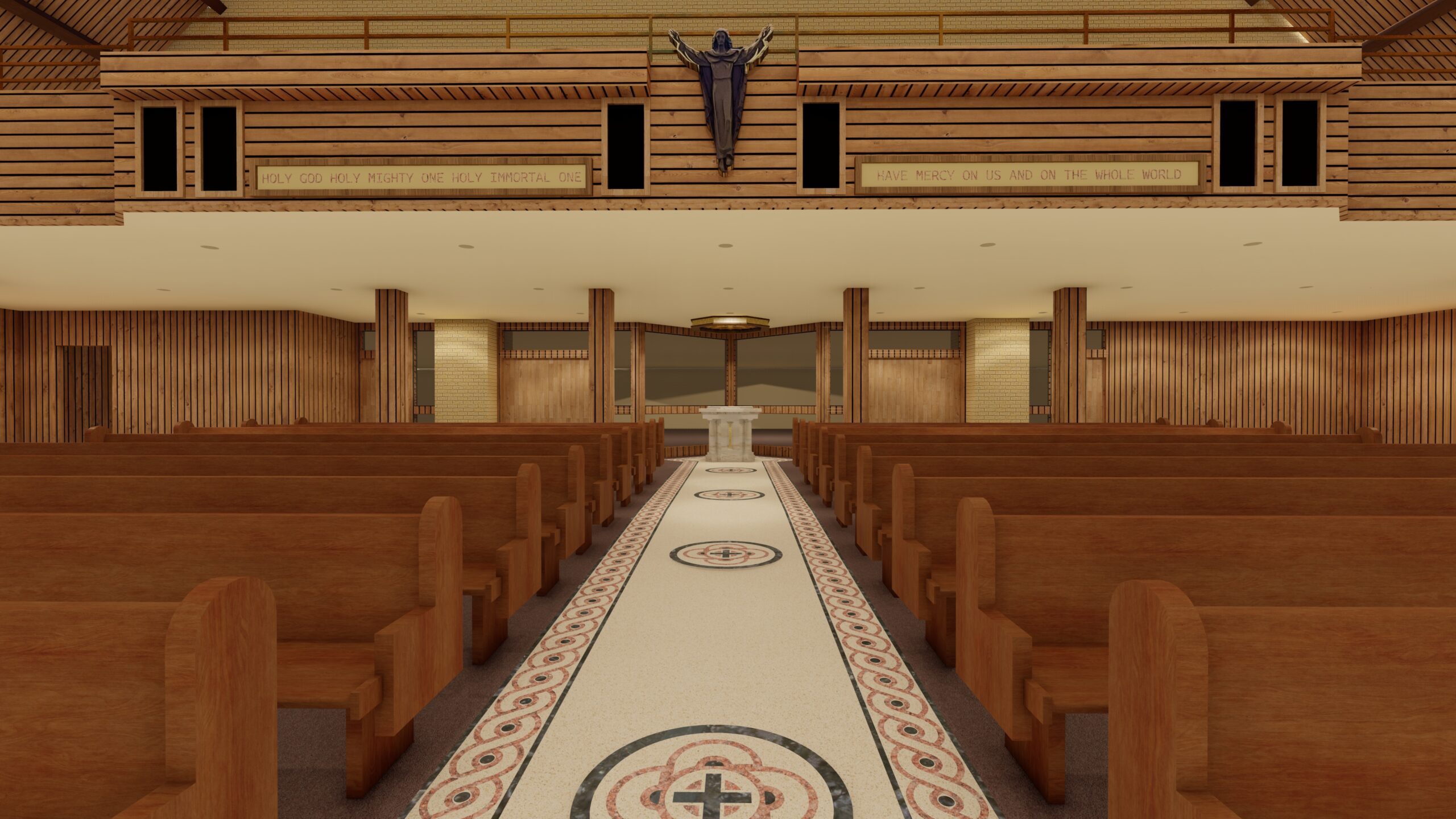
Center Aisle Towards Rear of Church
The carpet in the center aisle is replaced by a tile floor that features an ornamental pattern related to other decorative elements in the church. This tile floor connects the sanctuary to the baptismal font.
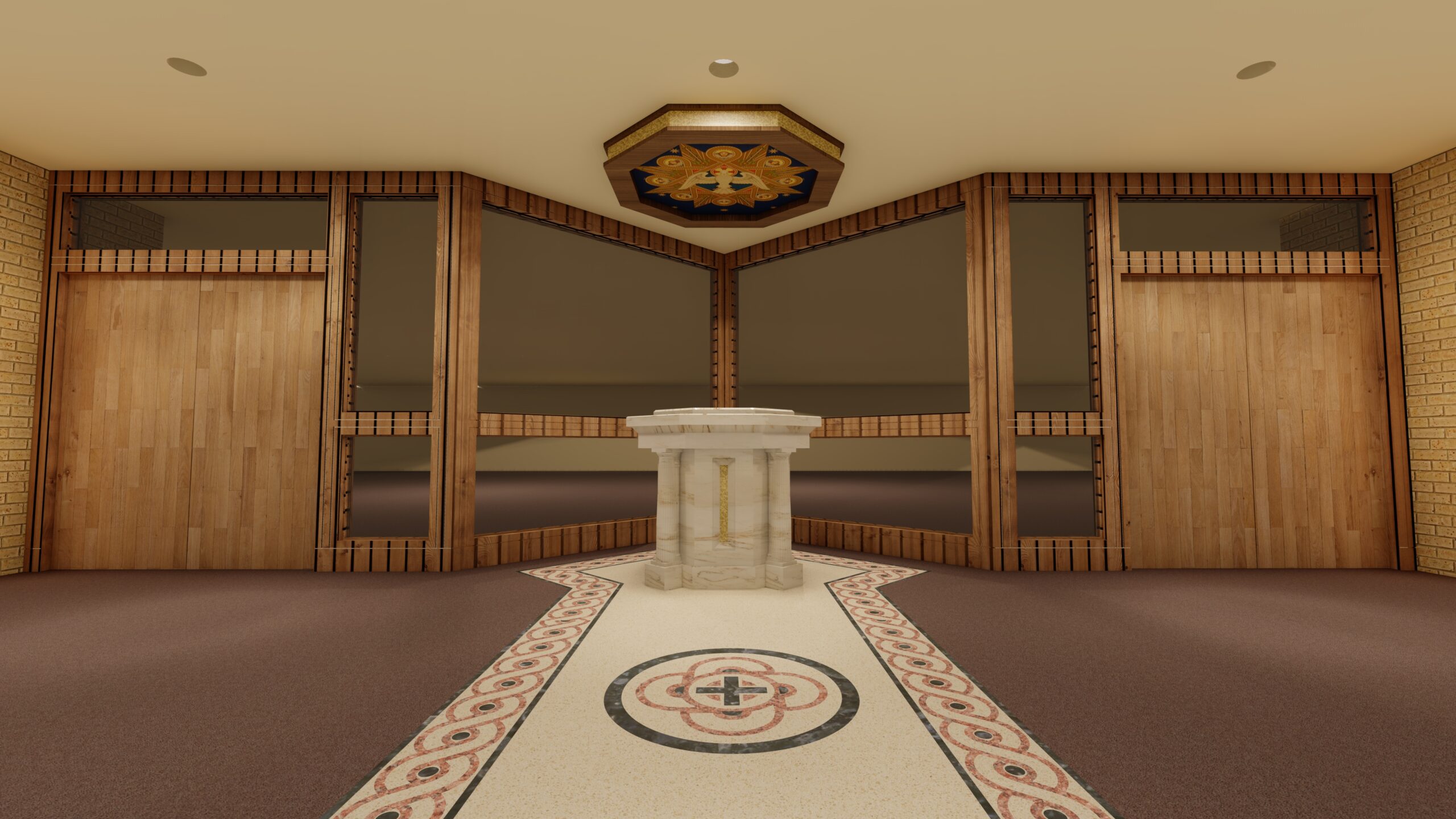
Baptismal Font
A new baptismal font is made of the same marble as the sanctuary furniture, and is ornamented to relate it to the altar and pulpit. (The precise design of the baptismal font is still being developed.) Above the font is another depiction of the Holy Spirit, who is invoked for the blessing of water. The new font has a shallow bowl that can be filled with unblessed, heated water to be blessed and used for Baptism. An area immediately around the baptismal font has a new ceramic floor like that in the sanctuary.
SAV Refresh Project Overview
Taupe with Gold Accent
The colors for new fabrics and paints are chosen to harmonize with the permanent palette of the building, seen in the stone mosaic behind the crucifix, the terrazzo on the floor and the brick walls. Those tones are within the terrazzo-based family of oatmeal, warm gray, brown, and subtle terracotta.
Fabrics & Carpeting
Materials for pew upholstery and flooring have been carefully selected for their durability, performance, and visual harmony within the sacred environment. Upholstery textiles such as neutral woven performance fabrics offer long-term reliability while helping to naturally camouflage everyday wear. High durability ratings — significantly exceeding typical residential and institutional standards — ensure suitability for the steady weekly use expected in a church setting. Performance technologies that provide moisture resistance, stain protection, and antimicrobial benefits further support ease of maintenance and longevity.
Commercial-grade carpeting with subtle pattern variation and blended tonal palettes will also enhance visual cohesion while minimizing the appearance of seams and wear over time. These material selections are intended to balance beauty, stewardship, and practical function, supporting both the liturgical character of the space and the needs of the parish community.